Best Cookware Materials Guide
As an Amazon Associate, I earn from qualifying purchases.
Choosing the right cookware can transform your cooking. Different materials excel at different tasks — understanding each helps you build a versatile kitchen without wasting money.
Material Comparison
| Material | Best For | Heat Response | Durability | Maintenance |
|---|---|---|---|---|
| Stainless Steel | Searing, sauces | Even, responsive | Excellent | Easy |
| Cast Iron | Searing, baking, frying | Retains heat | Lifetime+ | Seasoning required |
| Nonstick | Eggs, pancakes | Quick heating | 2-5 years | Easy but fragile |
| Ceramic | Low-fat cooking | Even distribution | Moderate | Moderate |
| Carbon Steel | Stir-fry, searing | Very responsive | Excellent | Seasoning required |
Stainless Steel: The Workhorse
Professional kitchens rely on stainless steel. It's durable, doesn't react with acidic foods, and develops fond essential for pan sauces. Look for fully-clad construction (layers of aluminum or copper bonded to stainless) rather than disc-bottom.

Recommended: Cuisinart MCP-12N Multiclad Pro 12-Piece Set
Solid mid-range stainless steel with triple-ply construction.
View on Amazon →Cast Iron: The Classic
Nothing sears a steak like cast iron. The incredible heat retention means the pan doesn't drop temperature when food hits it. A well-seasoned skillet becomes naturally nonstick over time.
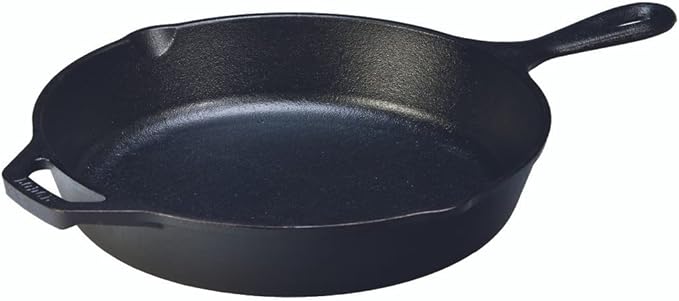
Recommended: Lodge 10.25 Inch Cast Iron Skillet
American-made, pre-seasoned, and incredibly affordable. This skillet lasts generations.
View on Amazon →Nonstick: The Convenience Pick
For eggs, pancakes, and delicate fish, nothing beats nonstick. Use only silicone or wooden utensils, never high heat, and replace when the coating shows wear.

Recommended: T-fal E91898 Ultimate Hard Anodized 12-Inch Pan
Hard anodized exterior, nonstick interior, heat indicator in center.
View on Amazon →Carbon Steel: The Chef's Secret
Carbon steel is lighter than cast iron but shares excellent heat retention. It's the go-to for professional stir-fry woks and French crepe pans. Heats up faster and responds to temperature changes better than cast iron.

Recommended: Matfer Bourgeat Black Carbon Steel Pan
The pan used in French culinary schools. Develops a natural nonstick patina over time.
View on Amazon →Building Your Starter Collection
If starting from scratch, here's the essential trio:
- 10-12 inch stainless steel skillet — everyday sautéing, searing, sauce-making
- 10-inch cast iron skillet — steaks, cornbread, serious heat
- Small nonstick pan (8 inch) — eggs and delicate items
With these three pans, you can handle 90% of home cooking tasks.
As an Amazon Associate, I earn from qualifying purchases.